
Your Renovation Will Look Dated in Five Years; Not Because of the Design. Because of the Walls.


Every year, clients invest six and seven figures into architects, designers, and the finest furniture available, then hand the largest surface in the house, the walls, to whichever crew can finish the cement or drywall the fastest. Five years later, they call to ask why a home that cost so much already looks tired. The answer is rarely the design. It's what's underneath it.
The Problem. The Surface Nobody Budgets For
In almost every room, the walls are the largest continuous surface, and the backdrop against which every other decision is staged. Yet they're often the first thing value-engineered out of a renovation, treated as a neutral background rather than a finish in their own right.
The result is a strange imbalance: a six-figure kitchen against a wall finish that costs a few dollars a gallon. The eye doesn't separate the two. If the backdrop ages faster than the room in front of it, the whole room ages with it.
Wallpaper in the Tropics
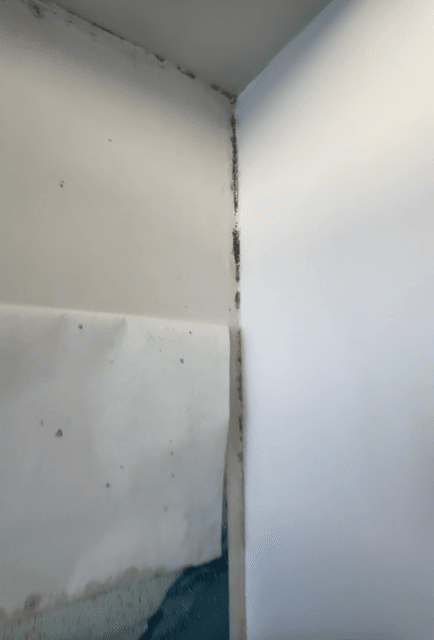
Even the most considered wallpaper, hand-blocked prints, silk grasscloth, and commissioned murals from storied ateliers, are at their core paper and adhesive. That combination has a shelf life everywhere. In Puerto Rico and the Caribbean, where humidity remains high year-round, shelf life is considerably shorter.
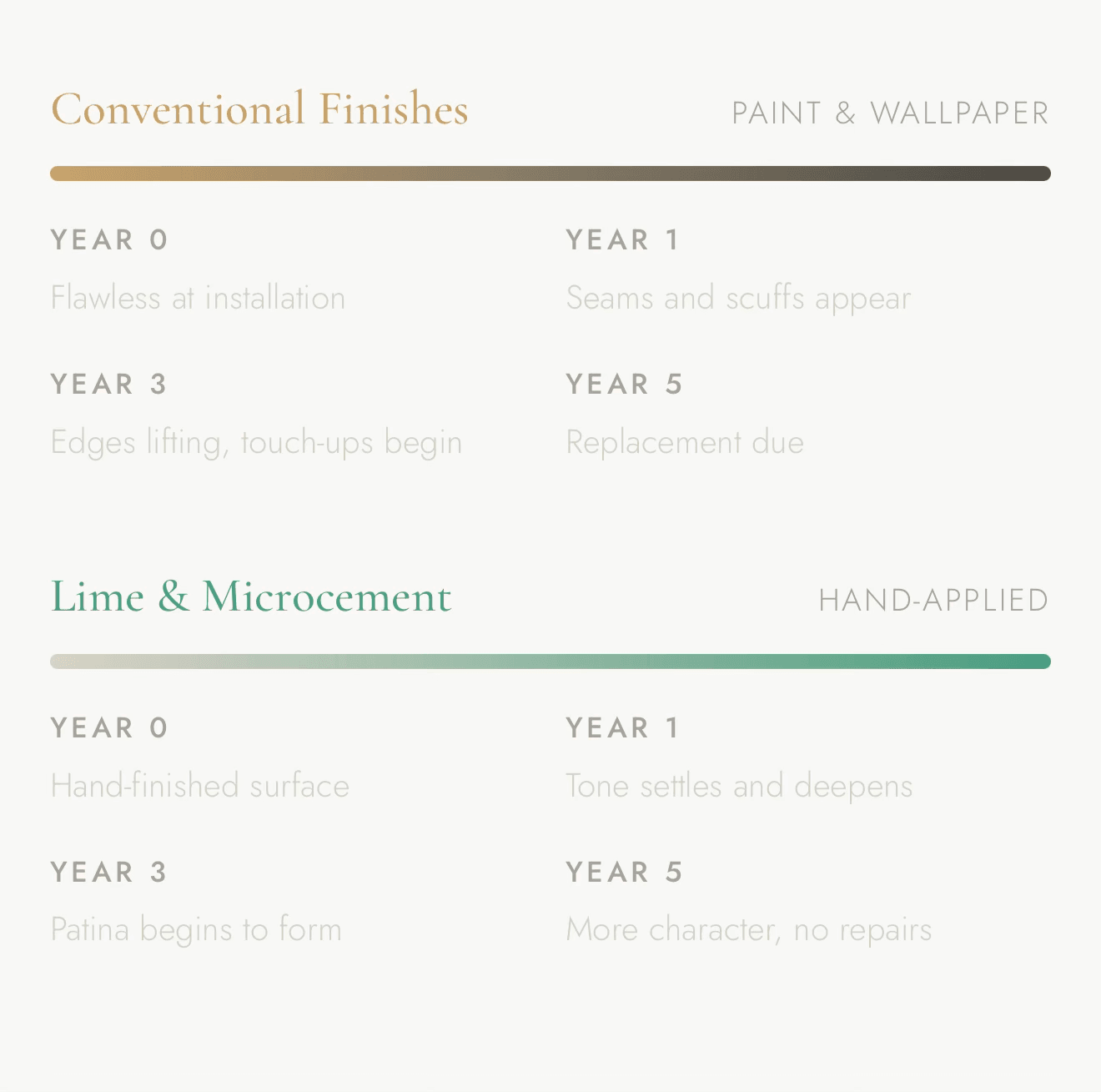
Seams lift first. Adhesive loses its grip behind a surface that can't breathe, and in bathrooms, kitchens, or rooms near the coast, moisture can take hold behind the paper long before anything shows on the surface. The wallpaper that looked flawless on installation day often becomes the first thing a designer has to explain away on a five-year walkthrough.
This isn't a quality issue. It's a climate mismatch. A material that performs beautifully in a New York apartment or an English country house can work against itself on a tropical island, regardless of its cost.
The Five-Year Arc
Tadelakt is a versatile finish that complements various design styles, from traditional to contemporary. Its unique texture and subtle color variations add depth and character to any space. Whether used as an accent wall, in a shower, or as a fireplace surround, Tadelakt creates a focal point that draws attention and admiration.
The ability to customize colors allows designers to tailor the look to match the overall theme of the interior. Soft earth tones are popular for creating a warm, inviting atmosphere, while bolder hues can make a dramatic statement.
What Aging Well Actually Looks Like
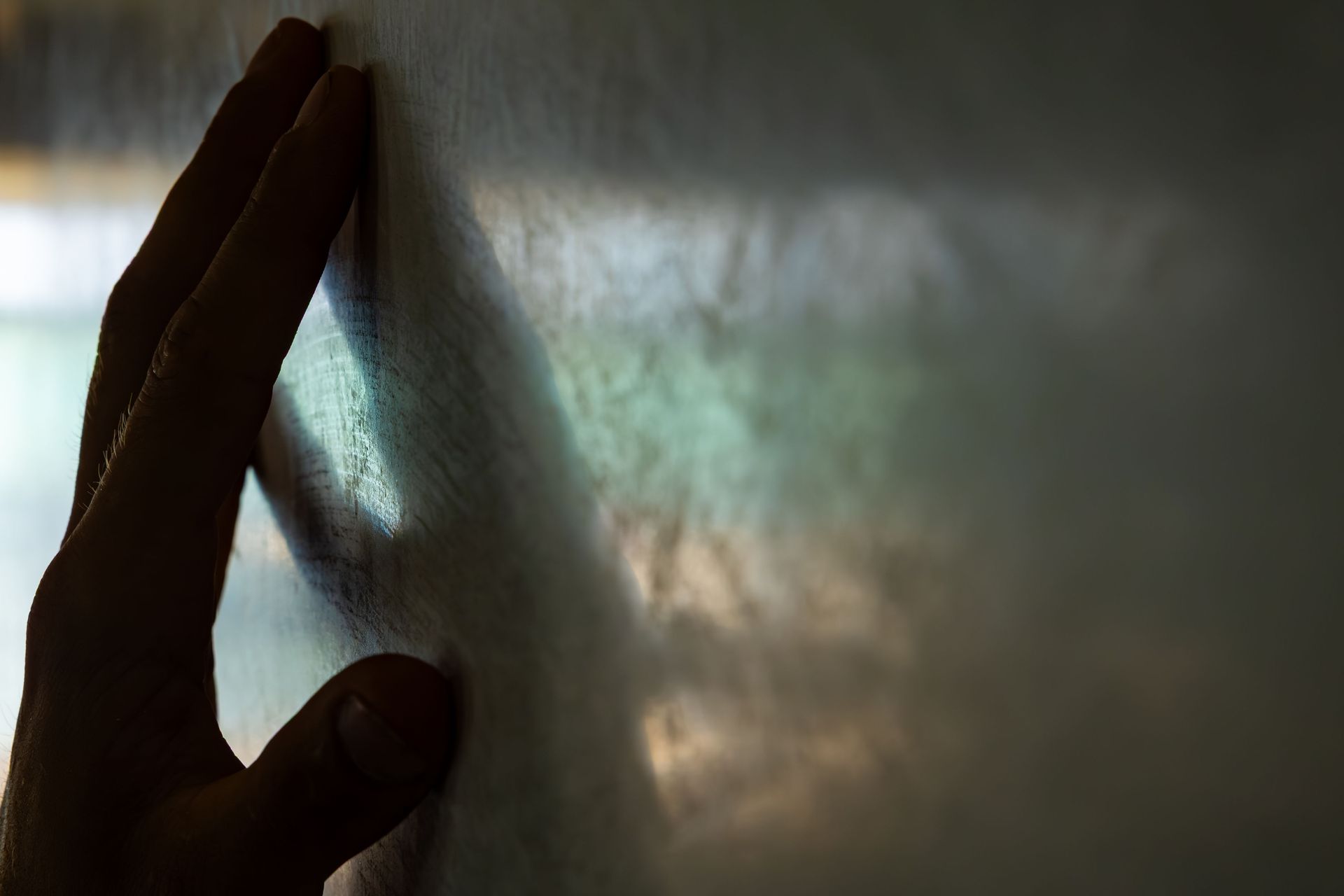
Lime plaster does not carry the same failure points as wallpaper and paint. There's no seam to lift, no paper layer, no adhesive bond holding the finish to the wall. The finish is the wall.
Lime is naturally alkaline, which makes it resistant to the mold that can take hold behind wallpaper in humid climates, and porous enough to let the walls release moisture rather than trap it. Over time, these surfaces develop a patina rather than a flaw: small marks and variations become part of the wall's character instead of something to repaint or replace.
This is closer to what "timeless" actually means. Not a style that happens to stay in fashion or a tendency, but a surface with no failure date built into it.
The Real Luxury is Spending Once
Conventional finishes such as wallpaper and paint, are cheaper to install and more expensive to own: repaint cycles, wallpaper replacement, and in humid climates, the quiet cost of moisture remediation behind walls no one thought to check. Hand-applied lime cost more at the outset and, after that, effectively nothing for the life of the home.
Before approving a wall finish, it's worth asking one question: What does this wall look like in five years, in this climate, without anyone touching it? If the honest answer involves repainting, replacing, or checking behind it, the finish was never finished.